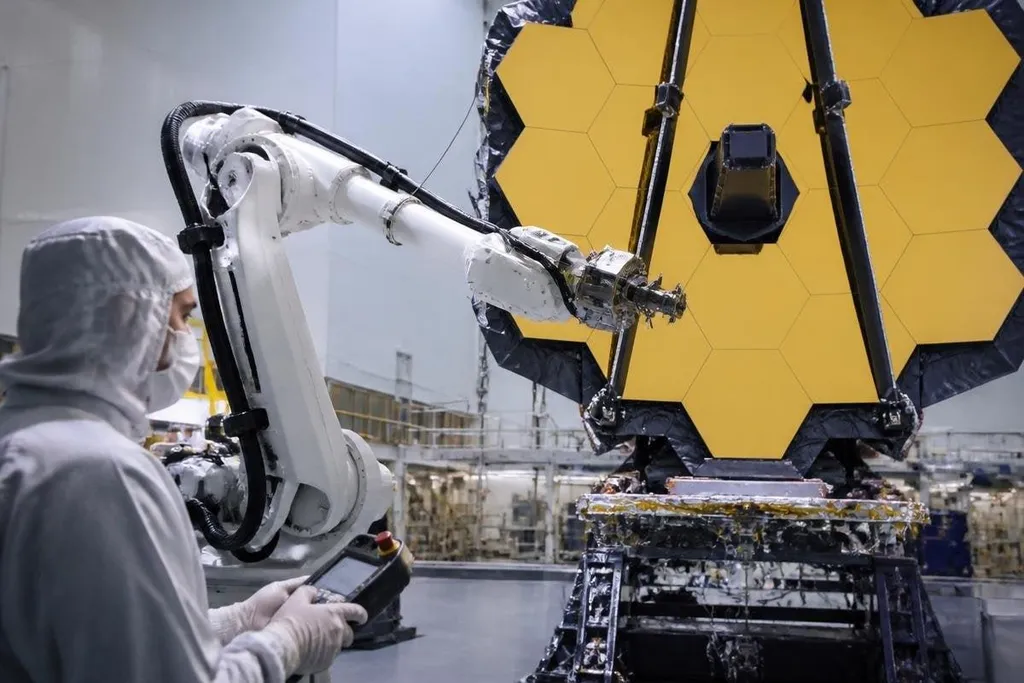
Future space telescopes will need to work far from Earth, where repair crews cannot reach them. Robots can take on the physical jobs that make a telescope useful after launch, from unfolding hardware to moving instruments and handling faults.
Quick read
- Robotic arms can move hardware without sending people into orbit.
- Servicing robots could extend a telescope’s working life.
- The hardest problems are control, power, communication, and safe contact.
Why telescopes need robotic help
A space telescope may spend years in an orbit that is difficult or costly to reach. Its mirrors, sensors, shades, and instruments must survive launch, then work in a cold, quiet environment with limited power and no direct hands-on repair.
Robots can handle physical tasks after launch. A robotic arm could help unfold a sunshield, move a tool, or place an instrument in a planned position. Small inspection systems could also check surfaces and connections using cameras and other sensors.
That changes the design process. Engineers would not need to treat every telescope as a sealed object that must work perfectly from its first day in space. They could add access points, handles, visual markers, and standard connections for robotic work.
Servicing can extend a telescope’s life
Some telescopes may stop working because of a worn component, a blocked view, or a fuel limit rather than a damaged mirror.
A servicing robot could replace a part, clear an obstruction, or move the spacecraft to a safer operating position if the design supports those jobs.
Refuelling is another possible task. A robot would need to find the correct port, make a stable connection, and move the fluid without causing a leak. Each step needs careful control because a small push can change the position of a spacecraft.
With a serviceable instrument bay, a telescope could receive updated sensors without replacing the whole spacecraft. That would give researchers more time to use the telescope and reduce the need to launch a separate observatory for every new instrument.
The robot must work with little room for error
Space servicing is difficult because the robot and the telescope are both moving. The robot must estimate distance, control its speed, and apply the right force while dealing with delayed instructions from Earth.
A camera can help the robot locate a handhold or connection point. Force sensors can show whether a tool has made contact. Software can combine those readings and stop the arm before it pushes too hard. The system still needs clear rules for faults, because a failed motor or lost signal can leave hardware in an unsafe position.
Power also limits the work. A robot may need energy for movement, cameras, computers, heaters, and communications at the same time. Telescope designers must decide which tasks can run together and which tasks need the robot to wait.
Those power choices also set limits on how much control people can keep during a mission. Robot24.com's space robotics reporting can place autonomous telescope plans beside named machines, software limits, and test results.
Human control will remain part of the system
Robotic control does not mean that people disappear from the mission. Operators on Earth may choose the task, check the robot’s plan, and approve a difficult movement. The robot can handle small corrections while a person watches the larger job.
That split matters because communication with a distant spacecraft can take time. A robot that waits for instructions after every movement may waste power and mission time. A robot that acts without limits may damage an expensive telescope.
The practical design target is controlled independence. The robot should complete routine movements on its own, stop when its sensor readings fall outside safe limits, and give operators enough information to decide what happens next.
A practical checklist for telescope plans
A telescope concept that includes robots should answer these questions:
- What can the robot reach? Check every panel, instrument, fuel port, and service point.
- How does it see? Look for cameras, markers, lights, and other aids for close work.
- What happens after a fault? Require a safe stop for lost signals, bad readings, or motor trouble.
- Where does the power come from? Match robot tasks with the telescope’s available energy.
- Which jobs stay on Earth? Set clear limits for human approval and robot control.
I'd give robotic servicing a place in telescope design when the added hardware can do a defined job, not when it appears as a general promise. A useful robot needs access, tools, power, and a safe way to stop.
The next question for each mission is practical: which repair or upgrade is valuable enough to justify carrying the robot all the way into space?